How much will comprehensive auto insurance cost in 2026?
An online guide to comprehensive auto insurance: “How much does comprehensive insurance cost?” Does the price depend on the car’s make? On repair costs? On the car’s age?
Car Insurance
An online guide to comprehensive auto insurance: “How much does comprehensive insurance cost?” Does the price depend on the car’s make? On repair costs? On the car’s age?
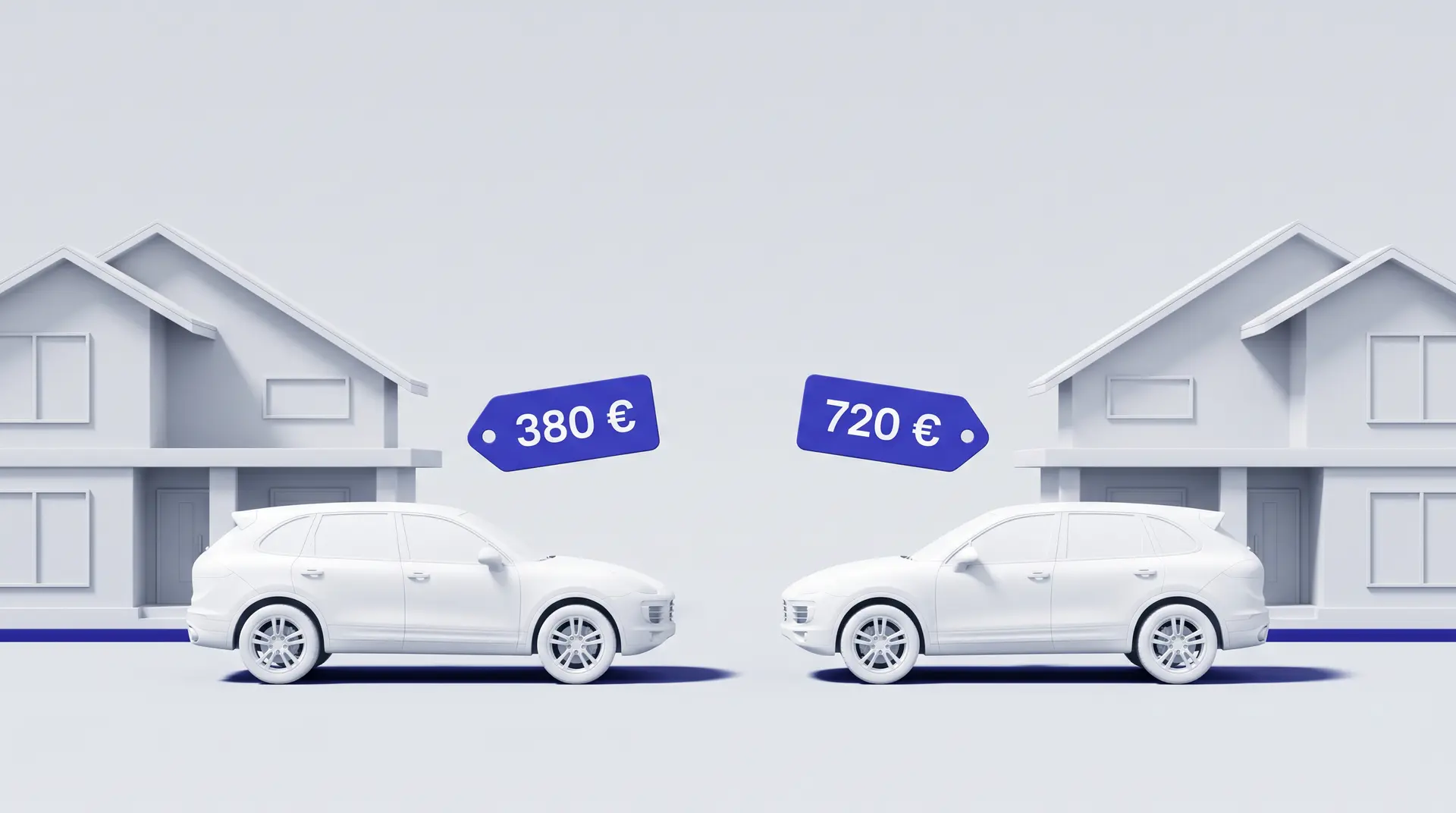
Two neighbors are buying nearly identical cars—same make, same engine, just a year apart. One pays 380 euros a year for comprehensive insurance, the other 720 euros. The cars are the same, yet the premium differs by almost double.
How does this happen? It’s because the cost of comprehensive insurance isn’t based on the type of car you drive, but on the likelihood that the insurer will have to pay out on your claim. The driver’s age, claims history, deductible, and even place of residence carry more weight than the badge on the hood.
This guide explains what actually makes up the cost of comprehensive insurance in 2026, provides specific calculation examples, and warns about exceptions that can leave people without a payout even if they have a valid policy.
Many articles provide a single figure—for example, “the average comprehensive insurance policy costs about 500 euros per year.” It sounds convenient. In practice, it’s almost useless.
The problem is that actual prices vary widely. The same car might cost one driver significantly less, while costing another significantly more. The average between them may not reflect a single real-world scenario.
An insurer doesn’t evaluate your car as “average.” Instead, they calculate the probability of a claim occurring within a year and how much it might cost. That’s exactly why an expensive car that rarely needs repairs is sometimes insured for less than a popular model with expensive parts and a high risk of theft.
The premium is determined by several factors, and they usually work together. Here are the most important ones.
Car repair costs. It’s not the make of the car, but the cost of parts and labor hours. A German premium model with an expensive bumper costs more to insure than a simpler model, even if their market values are similar.
The driver’s age and driving experience. Younger drivers are assigned higher risk factors. Comprehensive insurance premiums for young drivers under 25 are usually significantly higher than those for older, more experienced drivers.
Claims history. If you’ve had claims in recent years, your next policy will cost more. A clean claims history often qualifies you for a discount.
Deductible. The amount you pay out of pocket in the event of a claim. The higher the deductible, the lower the annual premium.
Scope of insurance coverage. Whether it’s partial or comprehensive coverage—more on the difference below.
Place of residence and vehicle storage. Large cities with higher rates of theft and traffic accidents usually mean a higher premium.
The deductible is the amount that the insurer does not cover. If your deductible is 150 euros and the damage is 600 euros, you’ll receive a payout of 450 euros.
It is precisely this that gives you the greatest control over the cost of comprehensive insurance. By choosing a higher deductible, you lower your annual premium because you assume more of the minor risks yourself.
The logic is simple. If you rarely get into minor accidents and have savings set aside for minor repairs, a higher deductible saves you money every year. But if you’re afraid of even the smallest expense and want the insurer to cover as much as possible—choose a lower deductible, but you’ll pay more.
A mistake many people make is choosing the lowest possible deductible “just to be safe,” even though over the course of a few years, the overpayment exceeds any actual damage they’ve ever incurred.
These two options differ in the scope of coverage, and this is where misunderstandings most often arise.
Partial comprehensive coverage typically covers damage that isn’t the driver’s fault: theft, fire, natural disasters, hail, damage caused by animals, falling objects, and broken windows. However, it does not cover damage you cause yourself in a traffic accident.
Comprehensive coverage includes everything covered by partial coverage, plus damage caused by the driver’s own fault—collisions, crashes, and rollovers.
Partial comprehensive coverage is significantly cheaper than full coverage, but the scope of protection is also more limited.
Who is partial comprehensive coverage suitable for? Often for older cars, where the premium for full comprehensive coverage is no longer worth the cost, but you still want protection against theft or natural disasters. For newer and more expensive cars, full comprehensive coverage is more commonly chosen.
To better illustrate how comprehensive insurance prices vary, here are three sample profiles. The figures are for illustrative purposes only; actual prices depend on the specific insurer and circumstances.
Do you notice a pattern? The same car (profiles two and three) costs differently based solely on the driver’s age and claims history. A young driver with the same car pays significantly more.
That’s why a comprehensive auto insurance calculator is the only way to find out your actual rate. The overall average simply doesn’t reflect your specific situation.
There are several legitimate ways to help lower your premium.
Instead of calling several companies, you can compare quotes online in just a few minutes. Draudykle.lt brings together offers from the most popular insurers operating in Lithuania in one place—you can see prices, deductibles, and coverage differences side by side, and once you’ve made your choice, you can purchase coverage online immediately without any phone calls or visits.
Having valid comprehensive auto insurance does not guarantee a payout. There are typical situations where the insurer refuses to pay—and often people only find out about them after damage has occurred.
How much will comprehensive auto insurance cost on average in 2026? There is no single exact figure. The cost of comprehensive insurance typically ranges from about 3 to 8 percent of the car’s market value per year, and the final amount is determined by the driver’s age, claims history, deductible, and scope of coverage. Only a comprehensive auto insurance calculator based on your specific details can show you the actual price.
Why are two identical cars insured at different prices? Because the insurer assesses the risk, not the car itself. Drivers differ in age, driving experience, claims history, place of residence, and the chosen deductible. That’s exactly why a car of the same make can cost very differently for two different people.
Is it worth it for a young driver to buy comprehensive auto insurance? It depends on the car’s value and your budget. Comprehensive insurance for young drivers is more expensive due to higher risk factors. If the car is expensive and new, comprehensive coverage may make sense even if it costs more. For an older car, partial coverage is often more sensible.
Is a higher deductible always worth it? Not always. A higher deductible lowers your annual premium, but you’ll have to pay more out of pocket if a claim is filed. It’s a good option for those who rarely experience minor damage and have financial reserves. If the likelihood of damage is high, a lower deductible may be safer.
What’s the difference between partial and comprehensive auto insurance? Partial auto insurance covers damage not caused by the driver’s fault—such as theft, fire, natural disasters, and damage caused by animals. Comprehensive coverage additionally covers damage caused by the driver’s own fault, such as collisions in a traffic accident. Comprehensive coverage is more expensive, but it offers broader protection.
There’s no single answer to the question “how much does comprehensive insurance cost,” because the price depends on your risk profile, not the make of the car. The driver’s age, claims history, deductible, and scope of coverage matter more than the logo on the hood.
Before signing a policy, compare offers from several insurers and read the exclusions carefully. The cheapest policy isn’t always the best if it contains many events that aren’t covered.
Compare insurance prices in just a few minutes
Draudykle.lt will help you compare offers from the most popular Lithuanian insurers and purchase insurance online.
Compare prices →
Published:
Updated:
Compare insurance prices in a few minutes
Draudykle.lt helps you compare offers from leading Lithuanian insurers and buy a policy online.
Compare prices →