Traffic Accident Report: How to Fill It Out Correctly and When to Call the Police
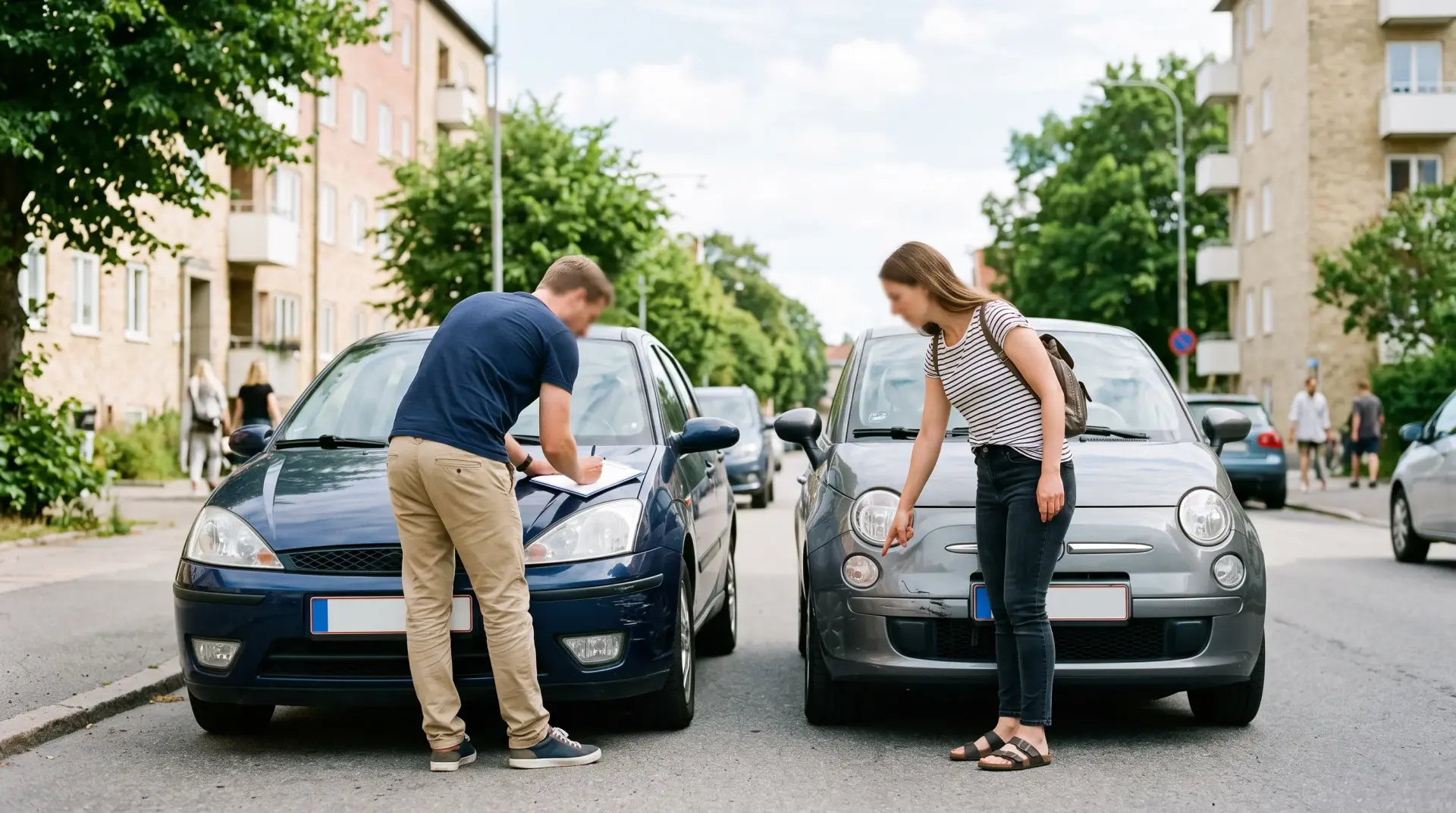
Two cars in a parking lot. As one was pulling out, it hit the other car’s rear bumper. Both drivers are standing there, looking at the scratch and wondering the same thing—should they wait for the police, or is it enough to settle it among themselves? Ten minutes pass. Half an hour passes. No one shows up, because no one was supposed to come in the first place.
Situations like this happen every day. Some people wait in vain for a patrol officer where one isn’t needed at all. Others, on the contrary, reach a verbal agreement, go their separate ways, and later end up without compensation because the at-fault driver changed their mind.
The bottom line is simple: in most minor incidents, a properly filled-out accident report is sufficient. But there are situations where the police are required by the Traffic Rules, and this is precisely where mistakes cost the most.
In shortIf only property was damaged in a traffic accident, no one was injured, no more than two insured vehicles were involved, and the drivers agree on the circumstances—there’s no need to call the police; a traffic accident report is sufficient. The police must be called if there are injuries, if there is a dispute over fault, if the other driver is under the influence, does not have insurance, or has fled the scene. Most importantly: even if you reach an amicable agreement, you must still fill out the accident report and both sign it; otherwise, the at-fault party might change their mind, and you’ll be left without compensation.
When Is an Accident Report Sufficient, and When Is the Police Required?
Let’s start with a clear distinction, since this is where most people get confused.
A traffic accident report is a paper or electronic document that drivers fill out themselves, without the involvement of law enforcement. It is appropriate when the incident is straightforward and both parties agree on all the details.
A report is sufficient when:
- only property was damaged in the accident, and there were no injuries or fatalities;
- no more than two vehicles are involved (some insurers accept more, but the standard case is two);
- both drivers have valid liability insurance (TPVCA);
- the drivers agree on who is at fault and the circumstances of the incident;
- no one is under the influence of alcohol or drugs.
When all these conditions are met, there is no point in waiting for a patrol car. The police usually do not even respond to such incidents.
Warning: You MUST call the police if: there are injured or deceased people; the drivers disagree on who is at fault or the circumstances; the other driver is under the influence; the other party does not have insurance or refuses to fill out an accident report; the at-fault driver fled the scene; public or third-party property has been damaged (road sign, fence, light pole), and the owner is not present.
A general rule that will put your mind at ease: if you have even the slightest doubt about whether you can reach an agreement, it’s better to call the emergency number 112 and ask for advice. The operator will tell you whether a patrol is needed.
Why a report is necessary even if you settle the matter “amicably”
This is where the most common—and most costly—mistake lies.
The two drivers inspect a minor scratch, the at-fault driver admits fault, they shake hands, and drive off. Three days later, the victim contacts their insurance company. And suddenly, the at-fault driver claims that nothing happened. Or that the victim was actually at fault.
Without a signed statement, it’s very difficult to prove anything. A verbal agreement means absolutely nothing to an insurance company.
A verbal “we’ll settle this amicably” has no legal standing. Only a declaration signed by both drivers records what actually happened and who is liable.
A completed and mutually signed declaration is your primary document, on the basis of which the insurer will make a decision regarding compensation. Therefore, even in the case of the slightest scratch, it’s better to take ten minutes to write everything down than to rely on goodwill.
How to Fill Out a Traffic Accident Report: Step-by-Step Guide
Every driver should have a paper form—it’s often included with the insurance policy. The process for filling it out is always the same.
1. Do not move the vehicles until you have taken photos. Take at least a few photos from different angles: an overall view, close-ups of the damage, license plates, road signs, and road markings.
2. Fill in the details for both parties involved. First and last names, phone numbers, car makes, license plate numbers, insurance companies, and policy numbers.
3. Indicate the circumstances of the accident. The form has checkboxes for typical situations—check the ones that apply to both vehicles.
4. Draw a diagram. The road, directions, traffic signs, and point of impact. Keep it simple but clear.
5. Describe what happened in your own words. Keep it brief, objective, and stick to the facts.
6. Both of you must sign it. Without both signatures, the document loses most of its value.
7. Each of you should take a copy. The paper form consists of two self-copying parts.
Tip: Before parting ways, take photos of each other’s completed accident report, driver’s license, and insurance policy. If the paper is later lost or damaged, you’ll still have a copy with all the details on your phone.
Traffic Accident Report Online and by Phone
The paper form is no longer the only option. Lithuania has an electronic traffic accident report system that can be filled out directly on your phone at the scene of the accident.
The electronic version has several advantages. The system guides you through the fields and ensures you don’t omit any required information. You can fill out the form by tapping the screen with your finger, and the data is saved and sent to the insurer digitally.
For such a report to be valid, it must generally be confirmed by both drivers on their devices or by each signing on the other’s screen. The principle remains the same—the consent of both parties is required.
If at least one party refuses to complete the form electronically or is unable to do so, a paper form is always available. Therefore, it’s a good idea to keep one in the car even for those who use the app.
| Criteria | Paper Declaration | Electronic declaration |
|---|
| Where to get it | Form included with the policy, at print shops | In the app / online |
| Internet connection | Not required | Required |
| Risk of errors | Higher (you might skip a field) | Lower (the system checks) |
| Diagram | Drawn by hand | Laid out on screen |
| Send to the insurer | Must be delivered or scanned | Automatic |
| Suitable when | Always | When both parties agree and are in contact |
Calculation example: how much an unfiled claim could cost
Let’s say a bumper and a headlight were damaged in an accident, and the repair estimate is 1,200 EUR.
If everything is documented correctly, the at-fault party’s TPVCA insurer will compensate the victim for the damages under mandatory insurance coverage. The victim pays nothing.
But what if the claim form isn’t filled out and the at-fault party changes their mind? Then the victim is left with a 1,200 EUR bill to pay out of pocket. Or they’ll have to seek justice in court, where evidence is required—specifically, the evidence that hasn’t been gathered.
~10 min—that’s how long it usually takes to fill out the report at the scene of the accident
2 signatures—without them, the document loses most of its evidentiary value
112—the number to call if you’re unsure whether to involve the police
The difference between a few minutes and a few hundred or a thousand euros. That’s exactly why no incident should be left unreported.
The most common mistakes that cost money
Here are a few typical situations that result in people receiving no compensation or a reduced payout.
Not documenting the incident because “it’s just a scratch.” Minor damage can hide more expensive damage hidden beneath the plastic. Always document it.
Missing signature. A one-sided auto accident report without the at-fault party’s signature is weak evidence.
An unclear or contradictory diagram. If the sketch does not match the description, the insurer may take longer to investigate the circumstances or assign partial liability to both parties.
No photos taken. Photos often determine the outcome faster than any written text.
Delay in notifying the insurer. You must notify the insurer of the accident immediately, usually within a few business days. The exact deadline is specified in your policy terms.
Important: Never leave the scene of the accident until you are certain you have everything: both parties’ signatures, photos, the other party’s contact information, and insurance details. It may not be possible to collect this information later, and the burden of finding the at-fault party will fall on you.
What to Do with Comprehensive Insurance (KASKO) and How It Relates to the Claim Report
If you have comprehensive insurance (KASKO), you still need to file a report even if you’re at fault. After all, the damage to your own car is covered by your comprehensive insurance policy, subject to the deductible.
The deductible is the amount you pay out of pocket. For example, if the deductible is 150 EUR and the repair costs 1,200 EUR, the insurer will cover 1,050 EUR. But even here, without the proper documentation, the process takes longer.
If you’re unsure about your policy’s coverage or the deadlines for reporting a claim, it’s best to review the terms before an incident occurs. On Draudykle.lt, you can not only compare offers from the most popular Lithuanian insurers and purchase insurance online, but also consult with an insurance advisor in Lithuanian to clarify exactly what your policy covers.
FAQ
Do I need to call the police after an accident if only the car is damaged? No, if no one is injured, all vehicles involved are insured, and the drivers agree on the circumstances. In such a case, a declaration is sufficient. The police are required when there are injuries, there is a dispute over fault, the other party is intoxicated, uninsured, or has fled the scene.
What happens if the other driver refuses to fill out the accident report? Call 112 and summon the police. Refusal to fill out the report is a direct reason to involve the police, because otherwise you will have no documentation of the incident.
Is an online traffic accident report just as valid as a paper one? Yes, if it is properly filled out and confirmed by both drivers. The electronic version is even more convenient, as the system checks the fields and automatically forwards the data to the insurer.
How soon do I need to report the accident to my insurer? Immediately, usually within a few business days. The exact deadline is specified in your policy terms, so it’s best to check it in advance.
What should I do if, after the incident, I notice hidden damage that wasn’t included in the claim? Contact the insurer and explain the situation. That’s why it’s important to document the location of the impact and take photos—they help link damage that becomes apparent later to the specific incident.
A brief summary
Most minor accidents are resolved without involving the police—a properly filled-out accident report is sufficient. You’ll need a police officer if anyone is injured, if there’s a dispute over who’s at fault, or if the other party is intoxicated, uninsured, or has fled the scene.
The most important rule is simple: even if you reach an amicable agreement, you must fill out the accident report and both parties must sign it. A few minutes now can save you several hundred or a thousand euros later.
Compare insurance prices in just a few minutes
Draukle.lt will help you compare offers from the most popular Lithuanian insurers and purchase insurance online.
Compare prices →