The At-Fault Driver Has No Insurance or Has Fled the Scene: Who Will Cover the Damages?
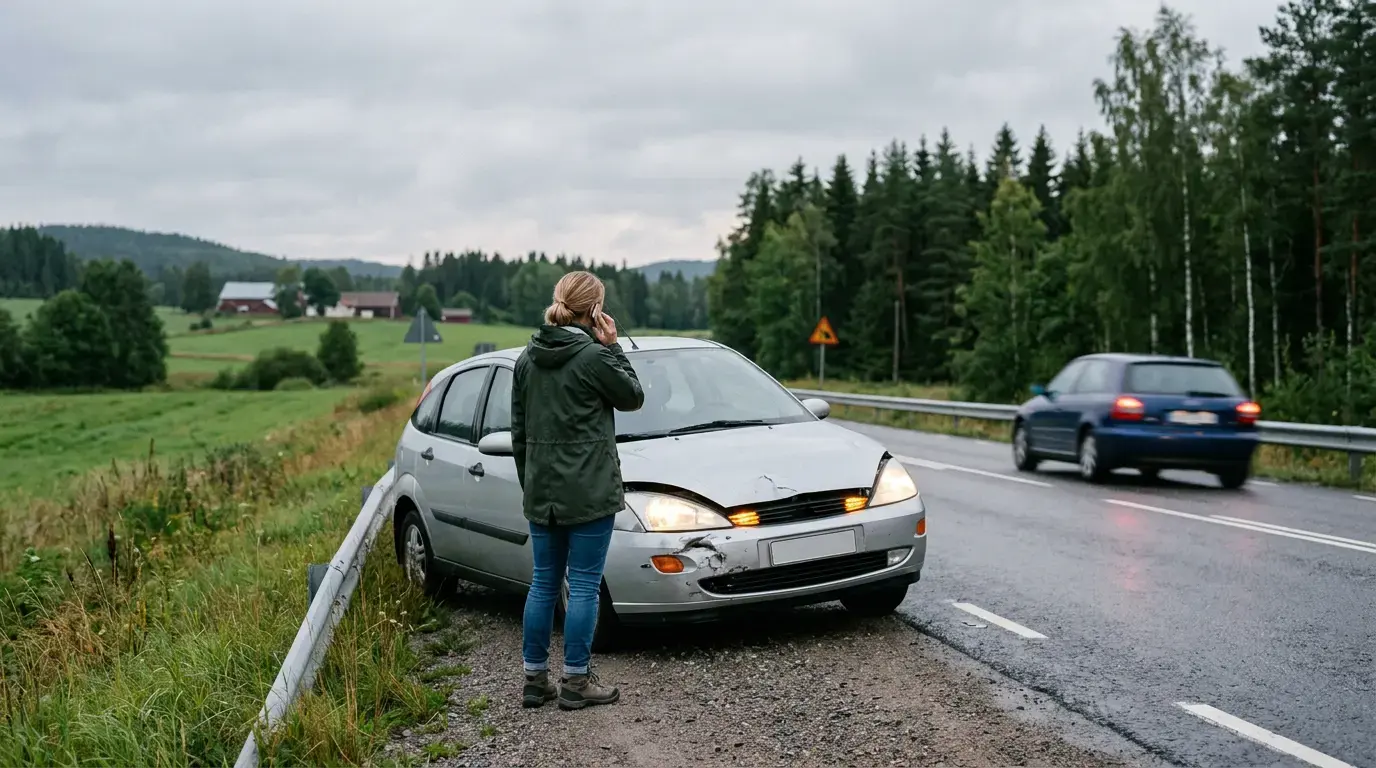
Imagine this: you’re standing next to your wrecked car, and the other driver is waving his hands around and admitting that he doesn’t have valid liability insurance. Or even worse—they simply drove off, leaving you with a dented fender and a bunch of questions. The first thought that crosses most people’s minds is, “Well, I definitely won’t be getting any money.”
And this is where one of the most costly mistakes on Lithuanian roads is made. Many victims don’t even bother to file a claim—they think that without the at-fault driver’s insurance policy, they won’t be compensated for the damage.
The reality is different. There’s a separate mechanism in place specifically for cases like these—when the at-fault driver is uninsured or has fled the scene. The Lithuanian Motor Insurers’ Bureau compensates for the damages. In this guide, we’ll explain how it works, where to turn, and what you can realistically expect.
In ShortIf the at-fault party doesn’t have mandatory insurance or fled the scene, the Lithuanian Motor Insurers’ Bureau (cab.lt) covers the damages—not you. You must submit your claim in writing; you’ll need the accident documents and a police report. A decision on the claim is usually made within 3 months of receiving the claim. If you don’t file a claim, you risk not receiving the compensation to which you’re entitled.
Why do people think they won’t get anything?
The logic seems flawless at first glance. Mandatory insurance (TPVCA) covers the damage caused by the at-fault party to others. No insurance—so there’s no one to pay. And if the at-fault party has fled the scene, there’s no one to even send the bill to.
This is precisely where many people go wrong.
Lithuania has an Insurance Bureau—an organization created specifically for situations like this. Its goal is simple: to ensure that the victim isn’t left with nothing simply because another driver acted irresponsibly or fled the scene.
An uninsured or hit-and-run driver does not mean that your damages become your personal problem. It simply means that you’ll need to contact a different institution rather than a regular insurance company.
Information: The activities and contact information for the Insurers’ Bureau are available on the website cab.lt. There you’ll find claim forms and lists of required documents—it’s a good idea to start there.
Who Pays for Damages When the At-Fault Party Is Uninsured
Situations vary, and who pays depends on the circumstances.
- The at-fault party is uninsured but identified. The Insurers’ Bureau compensates for the damages. The bureau then has the right to recover this money from the uninsured at-fault party through a recourse claim. In other words, you are paid, and the bureau handles the matter with the at-fault party itself.
- The at-fault party fled the scene of the accident and remains unidentified. And here is the solution. Damages to a person (injuries) are compensated, while certain conditions and limitations apply to property damage. That is why it is very important to call the police and document the incident—more on this below.
- The at-fault driver is insured through a vehicle registered abroad. In such cases, the mechanisms of the Insurance Bureau and the international “Green Card” system come into play.
The bottom line is simple: compensation from the Insurance Bureau is your right, not a favor. But you must file a claim properly.
| Situation | Who Pays for the Damage | An important condition |
|---|
| The at-fault party has TPVCA | The at-fault party’s insurance company | Standard claims handling procedure |
| At-fault party is uninsured, but identified | Insurance Bureau | The Bureau subsequently recovers the amount from the at-fault party |
| At-fault party fled the scene, unidentified | Insurance Bureau | Property damage is compensated with limitations |
| You have comprehensive auto insurance | Your comprehensive auto insurance provider | The fastest way, with a deductible applied |
Comprehensive insurance—often the fastest route
If you have valid comprehensive auto insurance, the simplest thing to do is to contact your insurer directly.
Comprehensive auto insurance covers damage to your car regardless of whether the at-fault driver is insured or fled the scene. All you need to do is report the incident to your insurance company. However, an deductible often applies here—its amount depends on the terms of your contract and the insurance plan you’ve chosen.
When the at-fault party is known and uninsured, your comprehensive insurance provider can recover the amount from them directly. Sometimes the deductible you paid is refunded—but this depends on the terms of the contract, so it cannot be guaranteed.
What to Do at the Scene of an Accident: Step by Step
Whether you’ll receive compensation at all depends on your actions in the first few minutes—especially if the at-fault driver is uninsured or tries to flee the scene.
- Call the police. If the at-fault driver is uninsured or has fled the scene, a statement alone isn’t enough—you’ll need an official police report. Call the emergency number 112.
- Document everything with your phone. Take photos of the vehicles, their positions, license plate numbers, damage, and road signs. The more details, the better.
- If the at-fault driver fled the scene, memorize the details: the car’s make, color, at least part of the license plate number, and the direction they drove off in. Interview any witnesses and note down their contact information.
- Do not repair the car immediately. The damage must be assessed. Rushing repairs may reduce or eliminate your compensation.
- Get a police report. The police will provide you with a document confirming the incident—you’ll need it when applying for compensation.
The biggest mistake is to drive away from the wrecked car thinking, “I won’t get anything anyway.” An unreported accident often means you’ve effectively lost your right to compensation.
How to File a Claim with the Insurance Bureau
The process isn’t complicated, but it requires properly prepared documents.
Claims must be submitted in writing. You can find the form and current requirements at cab.lt. Along with your claim, you’ll usually need to provide:
- details of the traffic accident (date, location, circumstances);
- a police report or ruling;
- vehicle documents;
- photos and a damage assessment;
- your bank account information for receiving the payment.
If the at-fault party fled the scene, the police must document that the person has not been identified. Without this document, compensation for property damage is usually not even considered.
| Decision-making deadline | up to 3 months from receipt of the claim |
| Where to file a claim | cab.lt (Insurance Bureau) |
| Alternative for those with comprehensive auto insurance | Contact your insurer |
Key Points at a Glance
If the at-fault party is uninsured or fled the scene, that does not mean you will be left without compensation. In such cases, the Insurers’ Bureau compensates for the damage; you must submit a written claim with all required documentation and a police report. A decision is usually made within 3 months.
Compare insurance prices in just a few minutes
Draudykle.lt will help you compare offers from the most popular Lithuanian insurers and purchase insurance online.
Compare prices →