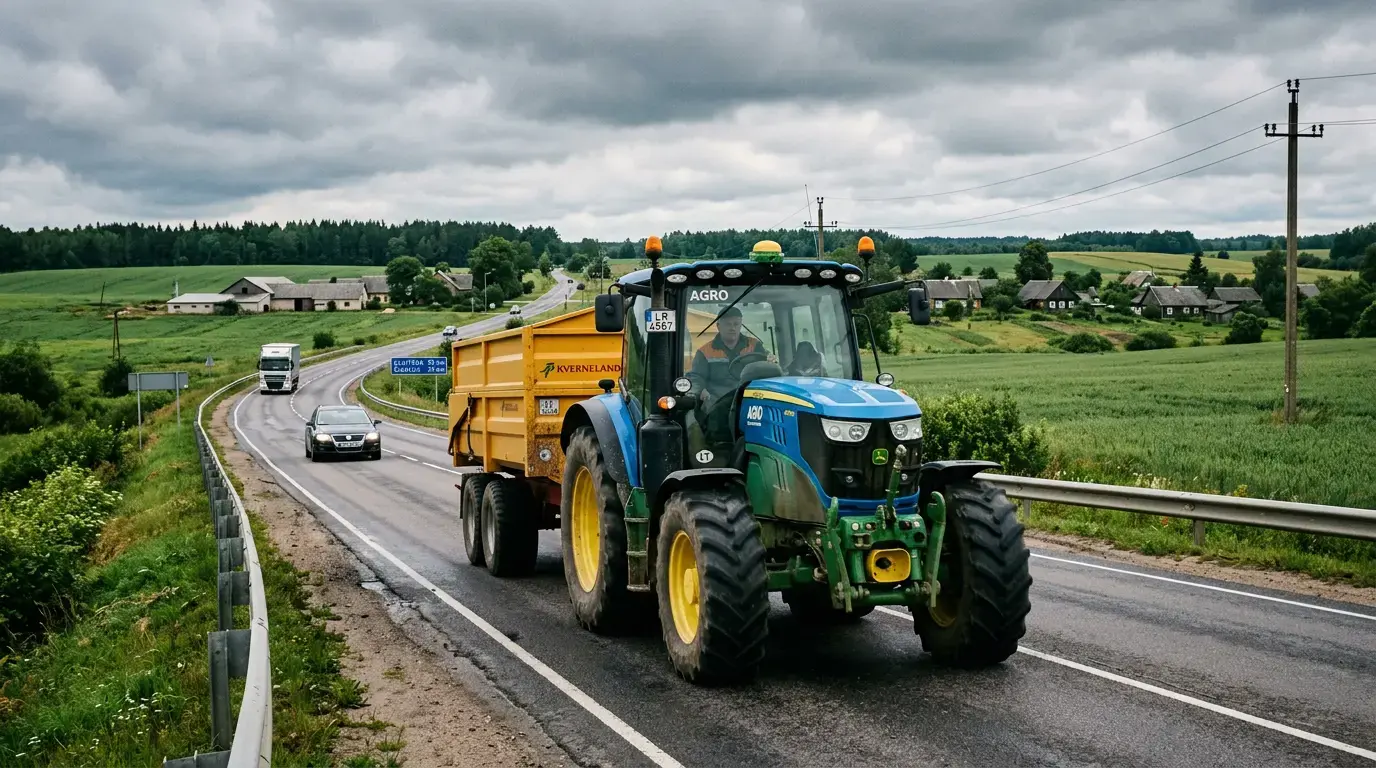
Tractor and Agricultural Equipment Insurance: What's Required for a Farm
Meta Title: Tractor Insurance: What Is Required for a Farm
Meta description: Tractor insurance is often overlooked, even though self-propelled equipment is subject to mandatory insurance. Find out what’s required and what’s worth insuring additionally.
---
Imagine this scenario: A farmer carefully insures a new combine harvester worth 180,000 euros—comprehensive coverage protects against fire, theft, and damage. But the old tractor, used daily to drive along a dirt road, remains uninsured. One morning, as that same tractor pulls out onto the road, it collides with a passing car. The damage amounts to several thousand euros. And only then does it become clear that compulsory insurance was required by law for that very tractor.
There are more cases like this than it seems. Many farmers believe that mandatory insurance applies only to cars. In reality, however, registered self-propelled machinery—tractors, combines, and other self-propelled vehicles—often falls under the same requirements.
This article explains when tractor insurance is mandatory, when it’s voluntary, and how to avoid overpaying for coverage you don’t even need.
In ShortFor registered self-propelled machinery that participates in road traffic (tractors, combine harvesters), TPVCA insurance is usually mandatory—just like for cars. The machinery itself (its value) is insured voluntarily, under a comprehensive (CASCO) policy. A common mistake is to insure only the most expensive machine while leaving a registered tractor without the required policy. Check the registration of each self-propelled machine and make sure to have at least the mandatory insurance.
Where farmers most often go wrong
The main mistake is simple: they only insure what’s most expensive or newest.
A farm typically has five or six pieces of equipment. A new tractor is fully insured, while several older ones are not insured at all. But the purpose of mandatory insurance is not to protect the equipment itself. It protects third parties—other road users, their property, and their health.
In other words, if your tractor causes damage to someone else, compulsory insurance covers that damage. Without a policy, you’ll have to pay that amount out of your own pocket.
A second common mistake is the belief that even unregistered vehicles must have compulsory insurance. Not always. The requirement is usually tied to registration and participation in public traffic. A tractor that never leaves a closed area and is not registered may fall into a different category. However, it’s worth checking this detail for your specific vehicle, as the rules change from time to time.
Warning: A registered tractor without mandatory insurance isn’t just a risk of having to pay for damages—it can also result in administrative liability. Check the registration status of each piece of self-propelled equipment before the start of the season.
What Is Mandatory and What Is Voluntary
Here, it is important to distinguish between two completely different types of insurance.
Mandatory (TPVCA) insurance. This is liability insurance. It covers damage your equipment causes to others. For registered self-propelled machinery used on public roads, it is usually mandatory—just like for any other vehicle. It doesn’t matter whether it’s a tractor, a combine harvester, or another type of self-propelled machine.
Voluntary (comprehensive) insurance. This protects the machinery itself. It covers theft, fire, rollovers, damage, and sometimes damage caused by natural forces. No one is forcing you to buy such a policy, but it’s risky not to insure a combine worth a hundred thousand euros.
Simply put: mandatory insurance protects others from you. Voluntary insurance protects you.
| Criteria | Mandatory (TPVCA) | Voluntary (Comprehensive) |
|---|
| Is it mandatory | Yes, for registered vehicles | No, optional |
| What is covered | Damage to third parties | The vehicle itself |
| Typical scenarios | Collision, damage to the road or other property | Theft, fire, rollover, damage |
| Deductible | Generally does not apply to the victim | Applies |
| Who it applies to most | All registered vehicles | Expensive or new equipment |
How to Choose Insurance Wisely
Start by taking inventory. Make a list of all your farm equipment and answer a few questions for each item.
Is the equipment registered? Does it travel on public roads? What is its current market value? Would losing it be a significant financial blow to the farm?
These answers immediately show what needs to be covered by mandatory insurance and what requires additional coverage.
Mandatory insurance doesn’t protect your equipment by a single cent. It protects your wallet from damages you might cause to others.
---
The article continues according to the provided structure.